Blogs
What's New Trending

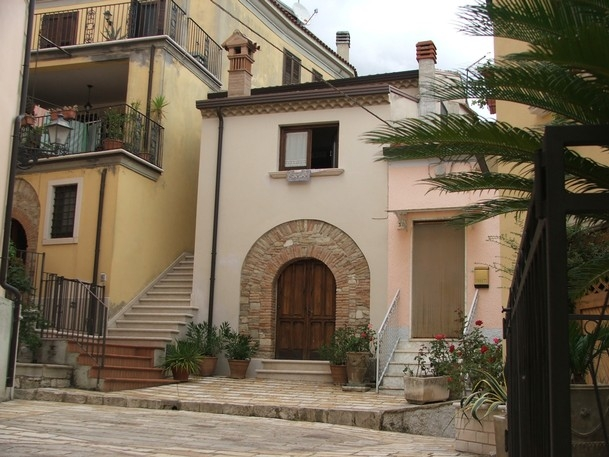
In these days, wandering around the town, I have often turned my gaze both to the entrances and to the top of the houses, because irresistibly attracted by showy and colorful flowers, but also by simple plants, which decorate the houses same.

It is a so-called “minor” gardening, carried out, sometimes with a lot of passion, usually by the “owner” of the house.
In reality the phenomenon, even in San Bartolomeo, has always existed, albeit in a more artisanal and economic form, but no less fascinating. cuisine (basil, parsley, celery, etc.) and, more often, by sparkling multicolored blooms?

They were lined up on the doorstep or in small scraps of spaces in the historic center and, making a fine show of themselves, they denoted the fine taste of the housewife, especially of the grandmothers who took care never to run out of water …
Not only that, but even more in our country our balconies and terraces, where existing, have been and still are adorned with flowers and ornamental plants.

The terracotta pots (in dialect: i rast, i rast ‘cèll) were reserved for the interiors of the houses.
Who does not remember the “rast appise da Miseria” (gen. Tradescantia) that cheered a corridor and even the kitchen with its delicate descending branches of a soft green color? …
.. And then, given the poverty a little in all the houses, there was a comfortable barter of plants between the various families and also a sort of race to who could keep the flower or the most beautiful plant.
Once upon a time the most popular plants were geraniums, roses and various succulents to amaze the guest … 
Here and there, then, the classic pergolas of the vine made a good impression.

In recent days – I said – I have found that home gardening (there is no more suitable term) is becoming more and more established, integrating and improving the public green and the appearance of the streets, both in the historic center and in the areas of urban expansion. It must be said that – mainly due to the higher income of families – the range of cultivated species has increased considerably, almost to the point of making exotic species prevail. 
And the ornamental species of today are practically all present.
A sign of this clear trend is the presence in the village of three garden centers, or simple resellers of plants and flowers. In some ways we are almost exaggerating: a plant that has won over all, for example, is the Bignonia grandiflora with its spectacular orange blooms, which let the flowers fall to the ground.
I personally find it too strong, to the detriment of our native flowers, perhaps with more delicate colors.
What we can admire today in San Bartolomeo is a sort of apotheosis of the Flower, present in every context.
A very beautiful phenomenon has spontaneously developed in via Pasquale Circelli, that of the adoption of small square flower beds at the base of the rows of plane trees, in the sense that almost every neighbor on the street takes care of that space by planting plants and flowers, sometimes of high quality, such as eg. hydrangeas. 
Then there are houses literally submerged by flowers, as you can admire in these images, which I collected on August 22nd.
One thing that, however, is sometimes out of place is the use of vases, of all shapes and sizes, in the hateful plastic material: the cause obviously derives from reasons of a practical and economic nature …
A very acceptable choice is that of the retirement home now housed in Calvary: here the old guests have been entrusted with one or more plants each – from the terraced garden in front – with the task of looking after it in every aspect.
And the excellent results are already there for all to see!
Crossing the old alleys of the historic center, I was struck by many “old-fashioned” rasts placed on the iafji or on the windowsills where succulent plants (eg Sedum) resist, which are the only living presence of those now abandoned nooks …
Personally, they trigger feelings of joy and sadness together. In areas built up from the 1960s onwards – as there are many single houses larger than the old ones – they are often embellished with a more or less large garden.
And this resembles the hortus conclusus of the Romans, in the sense that it satisfies the needs of both utilitas and voluptas.
In fact, both ornamental plants, often shrubs, and fruit trees and sometimes even small clippings of a domestic garden are grown here.
The design detail that has often not been thought about is that the trees planted grow quickly, occupying all the available spaces and putting at risk, with their large roots, the very stability of the buildings.
To conclude, we should all ask ourselves: why has man always surrounded himself with plants and flowers and is not even now able to abandon them?
I find the answer in the fact that Man – as well as being created in Eden – as the supreme biological entity, was born and evolved precisely in the primeval Forest, between Plants and Flowers.

Leave a Reply